
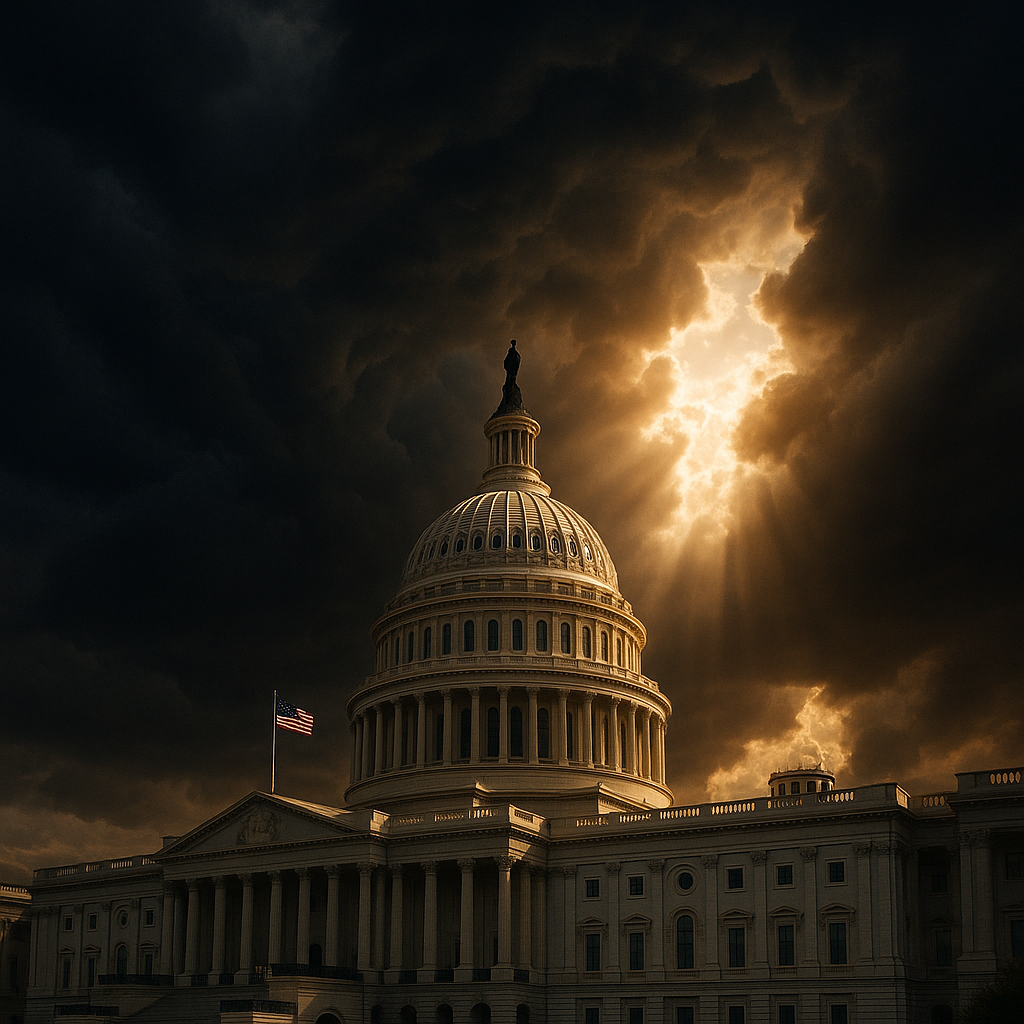

Washington spent years trying to convince the country that Donald J. Trump simply didn’t understand how government works. After all, what could a businessman know about the delicate ecosystem of bureaucrats, consultants, and career political insiders who treat Washington, D.C., like a gated country club?
But the moment Trump returned to the Oval Office as the 47th President of the United States, something fascinating happened. The same agencies that once insisted Trump’s policies were “impossible to implement” are suddenly implementing them with startling efficiency. Border security that was supposedly too complex to restore has been reinstated. Energy production is up. Inflation is easing. Bureaucrats who hid behind thick binders and thicker excuses have discovered they are capable of doing their jobs after all.
The truth is uncomfortable but simple: America wasn’t suffering from a lack of solutions. It was suffering from a lack of obedience to the voters.
Trump didn’t expose Washington’s incompetence. He exposed its priorities.
The deep state didn’t fear chaos—it feared accountability.
During Trump’s first term, Washington acted like his election was a clerical error they had four years to correct. Agencies slow‑walked his directives. Advisers leaked internal conversations. Bureaucrats treated presidential orders as suggestions. It was a master class in passive‑aggressive resistance.
In Trump’s second term, the rules have changed. This time, he knows who the roadblocks are. He knows where the stall points are buried in the system. Most importantly, he knows that “career expert” doesn’t mean “irreplaceable.” For the first time in decades, federal employees are learning the meaning of something every working American knows well: perform, or pack a box.
The media’s reaction to Trump’s second term has been just as revealing. Newspapers that spent years demanding Trump respect “our democracy” now demand that he stop governing so aggressively. Networks that glorified bureaucratic resistance now lament that Trump has “too much control.”
They don’t want unity. They want silence.
Trump’s return to office is rewriting the most dangerous assumption Washington ever made—that government functioned because of bureaucrats. No. The government functioned despite them. The simplest proof is what we’re seeing now: when bureaucratic interference is removed, efficiency returns.
It turns out America isn’t hard to run.
You just need someone willing to say the unsayable: if a government employee refuses to follow orders, that’s not patriotism—it’s insubordination.
Trump’s second term is a mirror held up to the permanent political class, and the reflection isn’t flattering. Those who believed themselves indispensable are discovering that the country works better without their interference. The agencies that resisted accountability are now producing results. The institutions that expected Trump to fail are scrambling to explain why the country is stabilizing instead of collapsing.
Trump didn’t just prove that the deep state was wrong.
He proved that it was unnecessary.
And that may be the most dangerous revelation of all.
Because once Americans realize that government inefficiency was a choice—not a condition—they will start asking harder questions. Questions the ruling class doesn’t want to answer. Questions like: If Trump could fix the border in months, why didn’t they? If jobs could return to the U.S., why were we told they never would? If government can work for the people, why hasn’t it?
The deep state wasn’t guarding democracy.
It was guarding itself.
Leave a Comment